

Medically reviewed by Karen Wolters, RN
Red light therapy (RLT), also known as photobiomodulation therapy (PBMT), is a non-invasive treatment for a variety of muscle, joint and skin conditions that has been growing in popularity over recent years.
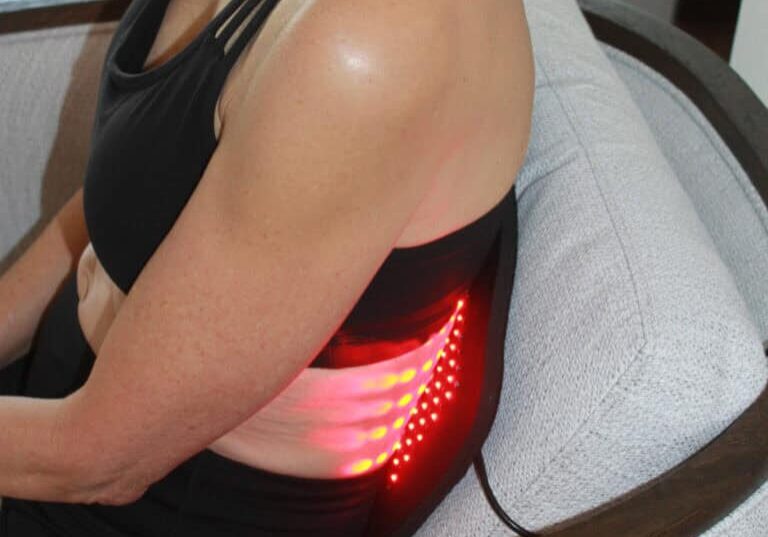
There are two common red light therapy devices, beds and pads. For people looking to experience the benefits of the treatment at home, pads are the more practical option due to their versatile and portable design.
What is a red light therapy pad?
Red light therapy pads are devices that are designed to target a specific body part, such as the shoulders, neck or feet. They should be flexible to enable a perfect fit, and portable so that they can be used on the move.
How do red light therapy pads work?
Using therapeutic wavelengths, such as 660 nm (red) and 850 nm (near-infrared), red light therapy pads stimulate your cells’ energy centres (mitochondria) to produce more ATP, the main energy carrier in all living cells.
Increased ATP can help with joint and muscle pain, improving circulation, and even tissue repair. A 2019 study found that “home-use PBM devices appear to mediate effective, safe treatments in a variety of conditions that require frequent applications”.¹
However, it’s important to note that not every red light therapy pad is as effective as it may claim, so doing your research into the features that matter is recommended.

The 6 things that actually matter when buying a red light therapy pad
- Consistent therapeutic wavelengths – Low quality LEDs cannot maintain a narrow band of the critical wavelengths needed for effective treatment due to rapid fluctuations.
- Power output – Low power output reduces the energy absorbed by the skin per minute, impacting results. Standard red light therapy sessions are around 20 minutes, so make sure to purchase a device that provides the highest amount of joules in that time, within FDA requirements. Independent laboratory testing found that HealthLight devices deliver the highest amount of light energy to the skin compared to competitors.
- Lens focus – Lack of lens focus causes light to scatter. To experience the best results, the red light needs to directly target the treatment area, which is why HealthLight uses a 20-degree focused angle LED that delivers light energy directly where it’s needed.
- Flexibility – For red light therapy to work effectively, the pad must be in close contact with the skin. Hard plastic cannot mold to the body, causing light dispersion, so flexibility is key. HealthLight uses soft neoprene pads to ensure they can conform to the shape of the body.
- Long term usage considerations – The body can build up a tolerance to red light over time. High quality red light therapy pads will take this into consideration by including an LED pulsing function, which enables the body to continue to benefit from the treatment long term. HealthLight devices have a special microprocessor controlling the LED to allow pulsing.
- Safety – All red light therapy pads purchased in the US should be FDA-cleared. The FDA requires that LED products do not exceed 105F. Devices that fail to meet this requirement could be dangerous, particularly for people who can’t feel higher temperatures, such as those with foot or hand numbness. HealthLight pads operate at a temperature between 98-103F, allowing a 20-minute session with the highest amount of joules without exceeding the FDA requirements.
Features of red light therapy pads that sound impressive, but often don’t matter
A common marketing technique involves hyping up a product by using large numbers and flashy sounding results or features. However, don’t be fooled. These often don’t accurately reflect the quality of a device. Here’s what to look out for:
- “Thousands of LEDs” – A high number of LEDs doesn’t automatically mean a more effective device. You’d be better off using a pad with fewer high quality LEDs than thousands of low quality ones.
- “Use for up to an hour at a time” – A longer treatment session does not lead to improved or faster results. In fact, a long treatment time suggests low power output or a disregard for user safety.
- “Can cure muscle pain” – Any red light therapy device claiming that it can cure a condition is using false advertising and should be avoided. While red light therapy can ease pain or support recovery, it is not a “cure”.
Common mistakes people make when buying a red light therapy pad
- Not checking specifications – Not all red light therapy pads are built the same. It’s vital to check the wavelength, power output and treatment time of a device.
- Assuming all wavelengths are the same – A high quality red light therapy pad should use wavelengths between 600-900 nm. The lower end of this spectrum is red light, and the higher end is near-infrared. Each is absorbed by the body differently.
- Not researching power outputs – Low power outputs could mean little to no benefit is felt, and overly high power outputs could risk your safety. Power outputs will vary by device type, for example a large pad designed for shoulders will have a higher power output than a smaller pad designed for ankles, so research what is optimum for your needs.
Investing in a red light therapy pad is an investment in your health. Don’t let yourself be swayed by exciting features that mean nothing or big promises that can’t be kept. Find a device that will genuinely benefit you by focusing on what really matters.
References
Start Your Pain Relief Journey Today
Contact us now and speak with a light therapy expert. They are here to help you find relief at home with soothing red light therapy.