

Summary
Blue light therapy is an emerging, research-backed treatment that targets the skin’s surface to support healing and skin health. Operating within the 400–500nm range, it offers powerful antimicrobial benefits—helping to eliminate bacteria (including antibiotic-resistant strains like MRSA) and keep wounds clean—while remaining safe and non-invasive. Often combined with red light therapy, blue light enhances overall treatment by pairing antibacterial action with anti-inflammatory and circulation-boosting effects, making it a highly effective addition to modern wellness and recovery solutions.
Medically reviewed by Karen Wolters, RN
Red light therapy has become a widely known tool used by chiropractors, physical therapists and even patients themselves worldwide. The benefits of red light therapy are becoming increasingly well-researched and appreciated, but what about the lesser-known blue light therapy?
What is blue light?
Blue light is in the visible light spectrum between the wavelengths of 400 to 500 nanometers (nm). As a result, it doesn’t penetrate the skin as deeply as red light, which has a wavelength of 660 to 850 nm. However, that doesn’t mean it is less beneficial.
What are the benefits of blue light?
The lower potential for penetration of blue light means it is ideal for targeting the epidermis layer of the skin, and can be used for both health and beauty reasons.
Blue light has also been found to be “intrinsically antimicrobial”, having the ability to “photodynamically inactivate the cells of a wide spectrum of bacteria and fungi”.¹
Research has even discovered that blue light can fight bacteria that is resistant to antibiotics, such as staph and MRSA² making it highly effective at disinfecting cuts, scrapes and burns, as well as keeping open wounds free of germs.
Combining blue and red light
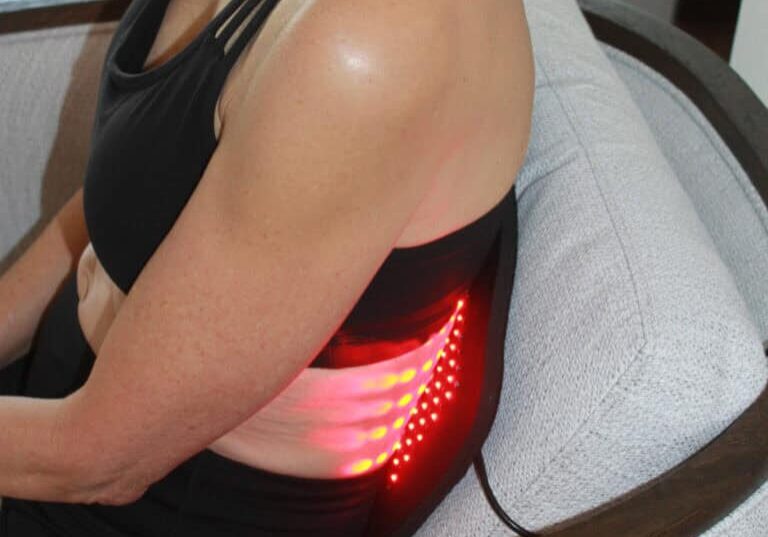
Blue LED diodes are often paired with red and/or infrared diodes in LED therapy pads, such as a number of devices offered by HealthLight. By combining LEDs with different wavelengths, a range of benefits can be delivered in one treatment at multiple molecular, cellular and tissue levels.
One scientific study suggested that the “synergistic effects of mixed light is due to synergy between the antibacterial and anti-inflammatory effects of blue and red light respectively.”³
Red light therapy can improve circulation, ensuring the nutrients and oxygen that damaged tissues need to repair are delivered efficiently. It can also help to alleviate the pain associated with inflammation. Therefore, the combination of red and blue light can be a powerful one, potentially reducing discomfort, while supporting the body to accelerate healing, and ensuring the site is bacteria-free as it does so.
Is blue light safe to use?
Blue light doesn’t always get the best press when spoken about in relation to screens. However, the light emitted by technology such as smartphone and laptops is a different wavelength (415-455 nm) to that of therapeutic products. The beneficial range of 460-470 nm used by blue light therapy is safe to use on the body, with no reported adverse side effects.
This being said, it is important to follow the advice of your healthcare provider before investing in a light therapy device, especially if you plan to use it on a wound site. Blue light therapy is not a replacement for prescribed medical treatments, but can be a great addition to a wellness plan.
It’s also vital to ensure that you use a high quality system to minimize risk. All of HealthLight’s devices are FDA-cleared, meaning you can trust them to be both effective and safe.
References
¹Halstead, F.D., Thwaite, J.E., Burt, R., Laws, T.R., Raguse, M., Moeller, R., Webber, M.A. and Oppenheim, B.A. (2016). Antibacterial Activity of Blue Light against Nosocomial Wound Pathogens Growing Planktonically and as Mature Biofilms. Applied and Environmental Microbiology, 82(13), pp.4006–4016. doi:https://doi.org/10.1128/aem.00756-16.
²Bowman, C., Bumah, V.V., Niesman, I.R., Cortez, P. and Enwemeka, C.S. (2021). Structural membrane changes induced by pulsed blue light on methicillin-resistant Staphylococcus aureus (MRSA). Journal of Photochemistry and Photobiology B: Biology, [online] 216, p.112150. doi:https://doi.org/10.1016/j.jphotobiol.2021.112150.
³Avci, P., Gupta, A., Sadasivam, M., Vecchio, D., Pam, Z., Pam, N. and Hamblin, M.R. (2013). Low-level laser (light) therapy (LLLT) in skin: stimulating, healing, restoring. Seminars in cutaneous medicine and surgery, [online] 32(1), pp.41–52. Available at: https://www.ncbi.nlm.nih.gov/pmc/articles/PMC4126803/.
Start Your Pain Relief Journey Today
Contact us now and speak with a light therapy expert. They are here to help you find relief at home with soothing red light therapy.