

Summary
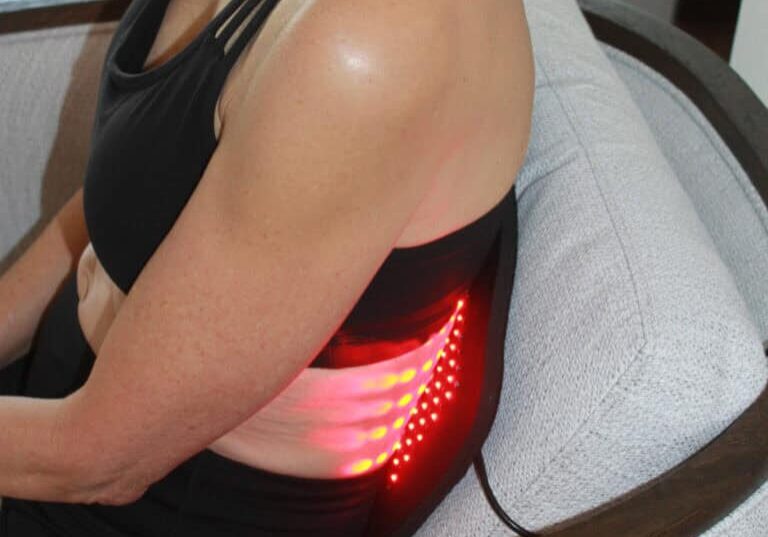
Infrared therapy uses invisible radiant energy, felt as heat, to support wellbeing. The two most common types, near and far infrared, offer different benefits. Near infrared (810–850 nm) penetrates deeper into the body, stimulating cellular energy (ATP) through photobiomodulation, which can help relieve pain, improve circulation, and support muscle recovery. In contrast, far infrared works at the surface level, gently heating the body to promote relaxation and ease general stiffness, often used in saunas. Choosing between near and far infrared depends on your needs, with near infrared better for targeted pain relief and far infrared suited to overall relaxation and wellness.
Medically reviewed by Karen Wolters, RN
Infrared is a form of radiant energy that is invisible to the human eye. Instead, it is perceived as heat by our bodies. There are three core types of infrared: near, mid and far. Each type appears at a different point on the electromagnetic spectrum, with the wavelengths ranging from 700 nm to 0.1 mm. In this article, we’re focusing on near and far.
Near infrared and far infrared have a variety of individual benefits and are each suited for different purposes. Knowing the benefits of each type of infrared can help you to find the best wellbeing solution for you.
Near Infrared
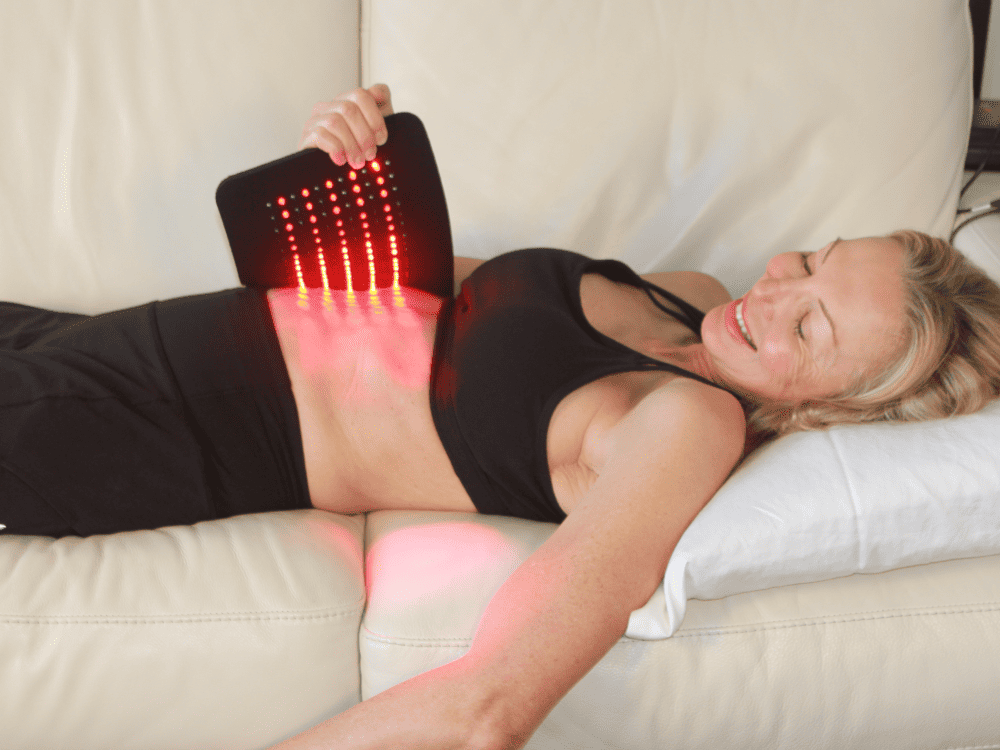
All of HealthLight’s devices use near infrared. It is a safe, non-invasive way to support joint, muscle and tissue health, and has been gaining popularity in recent years.
Near infrared is able to penetrate the skin’s surface, reaching parts of the body where pain often occurs. As a result, an increasing number of people are using it for acute pain relief, chronic pain management and post-exercise recovery, alongside physical therapy and wellness routines.
HealthLight’s devices use wavelengths of 810-850 nm. These wavelengths are absorbed by the mitochondria in the body’s cells, stimulating the production of energy molecules called ATP, which cells use to function and repair. This process is known as photobiomodulation (PMB).
Key benefits of near infrared therapy include:
- Pain relief – Discomfort in the muscles and joints is reduced thanks to increased ATP production, which triggers anti-inflammatory responses. This calms down overactive pain signals and supports tissue repair.¹
- Improved circulation – Enhanced blood flow ensures that the nutrients and oxygen your tissues need is delivered efficiently.
- Exercise recovery – After intense exercise, PBM therapy has been found to restrict the degree of exercise-induced muscle damage, limiting the need for a large inflammatory process.²
Near infrared therapy’s non-invasive nature means that it can be used consistently and safely. HealthLight’s range of FDA-cleared devices also ensure that you can find a solution that suits your exact needs, whether your problem area is your knees, shoulders, back, wrists, or elsewhere.
Far Infrared
Far infrared has a wavelength of around 3,000 nm to 1 mm and is often used in specially created saunas. The light heats the body directly, rather than the air around it, allowing for a similar detoxification-style experience as traditional saunas, at a lower ambient temperature. This means it can be more tolerable for people who find the high temperature of traditional saunas uncomfortable.
Far infrared offers a less targeted form of relief than near infrared, but can help with general relaxation and easing surface stiffness, thanks to the warmth it provides.
If you have an issue relating to a specific area of the body, such as arthritis or joint pain, then near infrared therapy is likely the best choice for you. However, if you’re experiencing stress or general stiffness, it may be worth trying far infrared therapy in the first instance.
Individual results may vary, but when used as directed, infrared light therapy can be the ideal addition to a wellness routine.
¹Staff Journalist (2025). Expert Interview: Does Red Light Therapy Work? A Research Review. [online] New Health Journal. Available at: https://newhealthjournal.org/news/does-red-light-therapy-work-research/.
²Fisher, S.R., Rigby, J.H., Mettler, J.A. and McCurdy, K.W. (2019). The Effectiveness of Photobiomodulation Therapy Versus Cryotherapy for Skeletal Muscle Recovery: A Critically Appraised Topic. Journal of Sport Rehabilitation, 28(5), pp.526–531. doi:https://doi.org/10.1123/jsr.2017-0359.
Start Your Pain Relief Journey Today
Contact us now and speak with a light therapy expert. They are here to help you find relief at home with soothing red light therapy.